
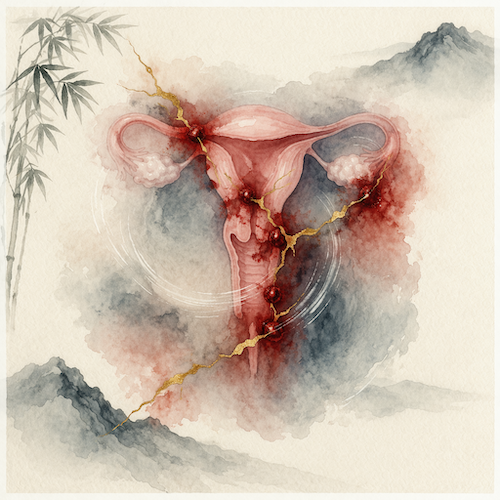
Endometriosis: The Pain We’ve Been Taught to Ignore
A Common Condition, Poorly Recognised
Endometriosis is often spoken about as though it were rare or niche. It isn’t. It affects around 1 in 10 women in the UK—roughly 1.5 million people. By any reasonable standard, that makes it one of the most common gynaecological conditions we see in clinic. And yet, despite that prevalence, it remains poorly recognised, frequently misunderstood, and consistently delayed in diagnosis.
The Reality of Delayed Diagnosis
On average, it takes close to nine years for someone in the UK to receive a diagnosis of endometriosis. That is nearly a decade of symptoms before being given a name for what is happening—years of pain, disruption, and uncertainty. In that time, many women will have seen their GP repeatedly—often numerous times—before anything is meaningfully investigated. That kind of delay is not simply unfortunate. It reflects something deeper in how these symptoms are interpreted.
Real World Experience: Managing, Not Investigating
According to many of my own patients, their experience at primary care level tends to follow a familiar pattern. A patient presents with significant menstrual pain, sometimes alongside pelvic discomfort outside of their period, pain during sex, fatigue, or bowel symptoms. What follows is often a brief assessment rather than a thorough exploration. More often, they are reassured that this is normal, advised to take over-the-counter painkillers, or prescribed hormonal contraception.
When Pain Becomes Normalised
This is where the problem begins to compound. When symptoms are repeatedly minimised, patients start to question their own experience. Over time, many come to accept a level of pain that, in any other context, would be considered clearly abnormal. The focus shifts quickly to management rather than understanding, only to be revisited years later when trying to conceive and start a family.
In clinic, when you actually stop and ask women to quantify their menstrual pain, the answers are striking. The first answer is often “Well, it’s normal pain.” However, when pressed further, it is not uncommon to hear figures in the region of 8 out of 10, sometimes higher. This is often accompanied by symptoms such as nausea and vomiting, fainting, and the reality of having to take time off work every month. And yet, many of these same patients have never been told that this warrants further investigation. They have simply adapted around it.
Challenging the Cultural Narrative
Somewhere along the way, a cultural narrative has taken hold—that periods are supposed to hurt, that this is something to be endured, that it is just part of life. But this framing does not hold up under scrutiny. Pain of that intensity, especially when it is cyclical and recurring, is not trivial. It is a clinical signal.
Even stepping back from the extreme end of the scale, anything beyond mild discomfort—anything that begins to interfere with daily life—deserves attention. If someone is routinely experiencing pain that they would rate as more than minimal (at most, 2 out of 10), that should prompt questions, not reassurance.
A Wider Issue in Women’s Health
The broader issue here is not limited to endometriosis. It sits within a wider pattern in which women’s health has historically been underfunded, under-researched, and, at times, dismissed. Reports across the UK have highlighted how frequently women feel unheard within the healthcare system, particularly when presenting with chronic or cyclical symptoms—something reflected consistently in day-to-day clinical practice. There are gaps in education, both for patients and practitioners, and those gaps have consequences.
The Education Gap
One of the most concerning aspects is how little baseline understanding many women have about what a “normal” menstrual cycle should feel like. If pain is expected, then abnormal pain goes unrecognised. If no one explains the difference, there is nothing to push against. The result is a kind of quiet disempowerment—symptoms are experienced, but not challenged.
And in the case of endometriosis, that delay is not benign. This is a condition that can progress. Ongoing inflammation, involvement of surrounding structures such as the bowel or bladder, and impacts on fertility are all well-documented. Waiting years for a diagnosis does not simply prolong uncertainty; it can allow the condition itself to advance.
All of this points towards a necessary shift in how we frame these conversations. Severe menstrual pain is not something to normalise. Recurrent pain is not something to push through indefinitely. And managing symptoms without investigating their cause should not be the default position. If someone tells you they are in significant pain, particularly on a repeated monthly basis, that should be enough to warrant a closer look. The concern is not just that endometriosis exists. It is how long people are left to live with it before anyone truly listens. A more practical question then follows: what happens in the years before diagnosis, and what support exists alongside conventional treatment?
A Chinese Medicine Perspective on Endometriosis
A Different Starting Point
Chinese medicine, and particularly acupuncture, approaches this from a fundamentally different starting point. Not as an alternative to medical care, but as a system that takes pain seriously from the outset.
In this framework, menstrual pain is never considered “just one of those things.” It is not brushed aside or normalised. It is interpreted. The classical idea is simple: where there is pain, there is obstruction. In the language of Chinese medicine, this relates to the movement of Qi and blood. When that movement becomes impaired, pain follows.
From Theory to Clinical Practice
This may sound abstract, but clinically it leads to a very concrete approach. Rather than grouping all painful periods together, practitioners differentiate. They look at the quality of the pain, its timing, what makes it better or worse, and the wider context of the patient’s health.
Understanding People, Not Just Labels
What we call endometriosis in Western medicine doesn’t translate directly into a single Chinese diagnosis. Instead, it tends to present across a number of overlapping patterns. Quite often there is what’s described as blood stasis—pain that is fixed, sharp, and progressively more severe. Alongside that, there may be Qi stagnation, where symptoms fluctuate more and are tied into stress or emotional tension. In other cases, cold plays a role, with cramping pain that improves with warmth, or there may be a sense of dampness and heaviness contributing to cyst formation and swelling.
The important point is not the terminology, but the implication: two patients with the same label of “endometriosis” may be treated quite differently, because their bodies are expressing the problem in different ways.
What Acupuncture Aims to Do
Acupuncture, within this context, is not simply about pain relief in the short term, although that is often part of it. The intention is to improve circulation through the pelvis, regulate the menstrual cycle, and reduce the kind of inflammatory and neurological sensitivity that drives ongoing pain. At the same time, treatment often works on the wider system—sleep, stress, digestion, energy—because these factors influence how pain is experienced and maintained.
What tends to emerge over time is not a dramatic overnight shift, but a gradual change in pattern. Patients often describe their pain as less intense, shorter in duration, and less dominating. They may rely less on analgesics. Cycles can become more predictable. Energy improves. Mood stabilises. None of this is framed as a “cure” for endometriosis, but it can meaningfully change how the condition is lived with.
This becomes particularly relevant when you consider the diagnostic delay. If someone is waiting years to be properly investigated, they are not existing in a neutral space during that time—they are managing real, often severe, recurring pain. Too often the only options presented are to suppress symptoms or endure them.
Chinese medicine offers a different middle ground. It provides ongoing support, regular clinical contact, and a sense that something active is being done. Symptoms are tracked, adjusted for, and responded to. For many patients, that shift alone—from passive waiting to active management—is significant.
Working Alongside Conventional Medicine
None of this replaces the role of conventional medicine. Endometriosis can involve structural changes that require imaging, hormonal treatment, or surgery. But it does suggest that symptom management does not have to be limited to those interventions alone. Acupuncture can sit alongside them, helping to reduce overall symptom burden, support recovery, and improve quality of life.
Perhaps the most important aspect, though, is the stance that underpins the whole approach. Pain is not dismissed. It is explored. The patient is not sidelined; they are involved. After years of being told that their experience is normal, exaggerated, or something to push through, that shift in itself can be profound. Because for many women with endometriosis, the first meaningful intervention is not a prescription or a procedure. It is being taken seriously.
Clinical Support
If you are dealing with ongoing menstrual pain, a diagnosis of endometriosis, or navigating wider challenges around hormonal health or fertility, this is an area I focus on closely in clinic. My work centres on women’s health, and that means not only supporting symptom management, but also helping you feel informed, heard, and able to advocate for yourself within the wider healthcare system. If you feel your concerns have been overlooked, or you want a more structured and proactive approach to your health, you are welcome to come in and discuss your situation.
Ben Carrigan | Acupuncturist
BSc (Hons), Lic. Ac., AFN, FEA, MBAcC

Can acupuncture help me?
For the most up-to-date research and evidence on the efficacy of acupuncture, please visit the British Acupuncture Council (BAcC) website.
If you would like to learn more about how acupuncture may be able to help you, please contact us today.