
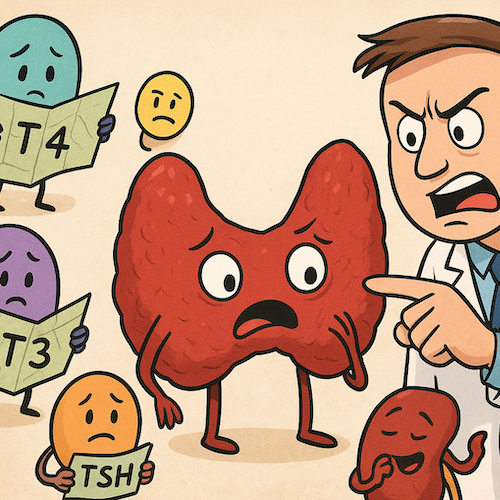
Thyroid Dysfunction: An Integrative Approach
What is the Thyroid?
The thyroid is a small, butterfly-shaped gland located in the front of your neck, just below the Adam’s apple. Despite its small size, it plays a huge role in regulating your body’s metabolism and overall energy use. Here’s a breakdown of its key functions:
Functions:
The thyroid produces hormones that regulate many vital processes:
- Thyroxine (T4) and Triiodothyronine (T3):
- These hormones control how your body uses energy. For example, they affect metabolism, heart rate, body temperature, and even brain development.
- Calcitonin:
- Helps regulate calcium levels in the blood. However, its role is less critical than T3 and T4.
Regulation:
The thyroid is regulated by the pituitary gland—a small “master gland” at the base of the brain that controls many other glands and processes via the release of hormones. It does so via what are known as feedback loops. For example, the pituitary gland releases TSH (thyroid-stimulating hormone), which signals the thyroid to produce T3 and T4 hormones. When T3 and T4 levels rise, their presence inhibits the pituitary gland from releasing more TSH, thereby keeping hormone levels balanced. This is called a negative feedback loop. It is designed to ensure that the body maintains stable metabolism and energy use, and is constantly self-regulating in real-time. However, for many reasons, problems can arise within this mechanism or due to other factors, which may then lead to thyroid dysfunction.
Understanding Thyroid Dysfunction: A Western Medicine Perspective:
Thyroid dysfunction is a common clinical concern, with symptoms ranging from fatigue, weight changes, depression, and cold intolerance to more serious systemic effects. While much focus is often placed on the thyroid gland itself, it’s important to take a broader view of thyroid hormone production and metabolism, especially when lab results and symptoms don’t align—which is very often the case.
Distinguishing Between Hypo- and Hyperthyroidism — And the Role of Autoimmunity:
When discussing thyroid dysfunction, it’s not only crucial to understand whether the gland is indeed overactive or underactive, but why this may be the case. Many thyroid disorders are autoimmune in nature, and distinguishing between functional states and root causes can significantly affect diagnosis and the appropriate treatment.
Hypothyroidism vs Hashimoto’s Thyroiditis
Hypothyroidism describes a state in which the thyroid gland does not produce enough thyroid hormones, leading to symptoms such as fatigue, cold intolerance, depression, constipation, and weight gain. In normal circumstances, hypothyroidism can present diagnostically as high levels of TSH in the blood. Chronic low levels of T3 and T4 in the blood stimulate the hypothalamus to continue to release thyrotropin-releasing hormone (TRH). This, in turn, signals the pituitary gland to keep releasing TSH—hence, high TSH levels in the blood. However, a common underlying cause of hypothyroidism is Hashimoto’s thyroiditis, an autoimmune disorder in which the immune system targets thyroid tissue—typically through antibodies such as anti-thyroid peroxidase (anti-TPO) and anti-thyroglobulin antibodies (anti-TgAb). This results in gradual thyroid destruction, often progressing silently over years before hormone levels shift noticeably.
Hashimoto’s can also present in a fluctuating manner, where patients alternate between periods of hyper and hypothyroid symptoms early on. This can be misleading unless antibody testing is specifically carried out.
Hyperthyroidism vs Graves’ Disease
Hyperthyroidism occurs when the thyroid produces excessive amounts of hormone, speeding up metabolism. This can result in anxiety, palpitations, tremors, heat intolerance, and unintentional weight loss. In normal circumstances, hyperthyroidism can present diagnostically as low levels of TSH in the blood. Chronic high levels of T3 and T4 in the blood suppress the hypothalamus’s release of TRH. This, in turn, removes the signal to the pituitary gland to release TSH—hence, low TSH levels in the blood. However, it’s important to note that other hormones, such as somatostatin (produced by the hypothalamus), glucocorticoids (produced by the adrenal cortex) and/or dopamine can also have an inhibitory effect on TSH production.
The leading autoimmune cause of hyperthyroidism is Graves’ disease, in which the body produces thyroid-stimulating immunoglobulins (TSI). These antibodies activate the thyroid inappropriately, mimicking the action of TSH and causing hormone overproduction. Some individuals with Graves’ disease also develop Graves’ orbitopathy, which affects the eyes and can cause swelling, redness, or bulging.
Why T3, T4 and Antibody Testing Is Essential:
In Western medicine and within the NHS, thyroid function is primarily evaluated by measuring levels of TSH and occasionally free T4. While this initial screening tool may be useful in some instances, it cannot offer a complete picture. Often, TSH levels, when tested, may appear normal, and patients will be given a clean bill of health even though a thyroid issue may still be present. To accurately assess thyroid function, therefore, thyroid antibody testing (anti-TPO, anti-TgAb, and TSI) and the measurement of active thyroid hormones (free T3 and free T4) are crucial.
Why Thyroid antibody testing (anti-TPO, anti-TgAb, and TSI) matters:
- Early detection of autoimmune thyroid disease. Without testing for thyroid antibodies, autoimmune thyroid conditions can go undiagnosed—particularly in their early stages when TSH may still appear “normal.”
- Differentiating between primary thyroid disorders and secondary systemic influences.
- Guiding treatment strategy, especially when symptoms don’t match basic hormone levels.
Autoimmune thyroid conditions also carry a higher risk of coexisting autoimmune diseases (e.g., coeliac disease, type 1 diabetes, vitiligo), making early identification even more clinically relevant.
Why T3 and T4 Testing Matters:
T4 is the primary hormone produced by the thyroid gland, but it is largely inactive. It must be converted into T3, the biologically active form, to exert its effects on metabolism and energy regulation.
How T3 Is Really Made: The Role of the Liver and Kidneys:
Here’s where things get really interesting: the thyroid gland actually only directly produces about 20% of the body’s T3. The remaining 80% is produced peripherally (primarily in the liver and kidneys) through enzymatic conversion of T4 into T3. This occurs through a process called deiodination. This involves the enzymatic removal of an iodine atom from T4, converting it into the active T3 form. This conversion is facilitated by selenium-dependent enzymes called deiodinases—specifically Type I and Type II deiodinase enzymes. For this process to occur efficiently, the liver and kidneys must be functioning optimally, and the body must have adequate levels of nutrients—such as selenium, zinc, iron, and B vitamins (especially those involved in methylation pathways). Impaired liver or kidney function, chronic inflammation, or nutritional deficiencies can all reduce this conversion efficiency, resulting in low T3 levels despite normal or even high T4 levels. This highlights the need for broader systemic investigation when thyroid symptoms are present, rather than relying solely on TSH or T4 as markers of thyroid health.
If this conversion process is impaired—a scenario not uncommon in individuals with methylation issues, liver dysfunction, or chronic illness—then a patient may exhibit signs of hypothyroidism despite having a “normal” TSH or T4 level.
Methylation Issues:
Methylation refers to an important biochemical process that influences gene expression and detoxification within the body. When methylation is impaired, it can contribute to autoimmune thyroid diseases (AITD) or even increase the risk of thyroid cancer.
Abnormal DNA methylation can silence genes involved in immune regulation or thyroid function, while histone methylation can change chromatin structure and alter gene expression. Genetic variations—such as those in the Methylenetetrahydrofolate reductase (MTHFR) gene—may affect methylation patterns and influence thyroid health. Environmental factors can also drive epigenetic changes that contribute to thyroid disorders.
Nutrient levels tied to methylation can be assessed through blood tests. Elevated homocysteine may suggest impaired methylation, and low folate or vitamin B12 can point to underlying issues.
When evaluating a possible methylation problem related to thyroid conditions, a doctor usually begins with standard thyroid testing and may follow up with tests for homocysteine, folate, and vitamin B12. Genetic testing for variants like MTHFR can reveal predispositions, though it does not confirm an active methylation defect.
Remember, impaired methylation and a reduction of the body’s ability to effectively convert T4 to T3 may lead to low cellular thyroid activity, even when lab markers appear unremarkable.
Don’t Always Blame the Thyroid:
Because the thyroid is only responsible for a fraction of total T3 production, it should not always bear the brunt of the blame when thyroid-related symptoms arise. If T3 levels are low, it may not indicate a thyroid problem, per se, but rather a dysfunction in the conversion mechanisms occurring elsewhere in the body—particularly in the liver, kidneys, and gastrointestinal (GI) tract.
This distinction is critical, as it can influence proper diagnosis and decisions relating to appropriate treatment.
TREATMENT:
Rethinking Standard Treatment: Is Levothyroxine Always the Answer?
In many cases of thyroid dysfunction—especially when TSH is mildly elevated or borderline—treatment begins with levothyroxine, a synthetic form of T4. While this is standard practice and can be life-changing for some, it’s not always the most appropriate first-line intervention. When used prematurely or inappropriately, levothyroxine can suppress the thyroid’s own hormone production, effectively ‘pushing it into submission’ through negative feedback on the pituitary gland. This may be counterproductive, especially if the thyroid gland is not the primary issue. For example, when poor T4-to-T3 conversion is driven by liver, kidney, or methylation issues, the thyroid is simply a bystander. Treating the numbers with levothyroxine alone can mask deeper systemic imbalances and may even lead to long-term dependence on medication. A more nuanced, root-cause-focused approach is often needed—one that includes full thyroid panels, antibody testing, and consideration of metabolic function beyond the gland itself. For example, in such cases, combination therapy, including liothyronine (T3) and/or addressing underlying metabolic dysfunctions, may be more appropriate.
The Role of Iodine: A Double-Edged Sword
Iodine is an essential trace element that plays a critical role in thyroid hormone production. Both T3 (triiodothyronine) and T4 (thyroxine) are named for the number of iodine atoms they contain—three and four, respectively. Without adequate iodine, the thyroid cannot synthesise sufficient hormone, which can lead to hypothyroidism and, in severe cases, goitre.
However, while iodine deficiency is still prevalent in some parts of the world, it is relatively rare in many developed countries due to the iodisation of salt and dietary availability. In iodine-sufficient individuals—particularly those with autoimmune thyroid conditions like Hashimoto’s or Graves’ disease—supplementing with iodine can actually exacerbate inflammation and trigger or worsen autoimmune flares. This is because excess iodine can overstimulate an already reactive immune system, potentially accelerating thyroid tissue destruction.
Therefore, iodine supplementation should only be considered after confirming deficiency, typically through a urinary iodine test or a full nutritional assessment. Blanket iodine supplementation, especially in autoimmune thyroiditis, may do more harm than good. A functional, individualised approach is essential—supporting iodine only when needed, and ensuring that other cofactors such as selenium, which helps modulate iodine’s effect and protect the thyroid from oxidative damage, are also considered.
A Chinese Medicine Perspective: Beyond the Thyroid:
In Classical Chinese Medicine (CCM) and Traditional Chinese Medicine (TCM), there is no direct anatomical or physiological equivalent to the thyroid as defined in Western medicine. In modern times, it has been loosely linked to the Spleen due to its role in metabolism, but this is a modern imposition designed to retrofit Chinese medicine into a Western biomedical framework. That move is often unhelpful and distorts the foundational principles of Chinese medicine. Instead of isolating the thyroid as a single malfunctioning structure, symptoms that might be labelled “thyroid issues” in Western language are understood through the dynamics of organ systems, the movement of Qi and Blood, and the balance of Yin and Yang. The body is seen as an interconnected whole rather than a collection of discrete parts, not unlike Western notions of feedback loops and systems biology—though rooted in a very different way of thinking.
Chinese medicine does not chase lab values or single variables, such as low T3, elevated TSH, or autoimmune antibodies. Nor does it confine diagnosis to rigid, codified categories. The focus is always the individual: What is the nature of the imbalance? Is there constraint, depletion, or disruption in movement and transformation? How are the emotions, environment, diet, and lived experience shaping the presentation? Each person’s physiology, constitution, and context dictate how symptoms are interpreted and addressed.
Treatment is correspondingly tailored. Acupuncture, herbal medicine, dietary guidance, and lifestyle support are combined according to the individual’s unique presentation. The goal is not to force hormone levels up or down but to restore coherence and communication within the system so regulation can occur naturally. The practitioner works with the body’s intelligence rather than imposing a corrective from the outside.
From practical experience, no two patients present the same way, and no single framework can be imposed on everyone. Trying to map thyroid dysfunction—or any Western diagnostic label—onto a fixed “pattern” reduces Chinese medicine to something it was never meant to be. It overlooks two millennia of clinical sophistication and undermines the integrity of a fully developed medical system. Whether treatment involves acupuncture, herbs, pharmaceuticals, or an integrative approach, honouring the dynamic interplay of organ systems and the individuality of each patient leads to more meaningful and lasting outcomes.
As a practitioner, I still wear my Western medicine hat when appropriate and fully value the role of biomedical testing. I regularly recommend thyroid panels, antibody testing, and other conventional investigations to inform treatment and ensure patient safety. Working in an integrative way allows me to support patients within both Western and Chinese medical frameworks, bridging the strengths of each system rather than setting them in opposition.
Ben Carrigan | Acupuncturist
BSc (Hons), Lic. Ac., AFN, FEA, MBAcC

Can acupuncture help me?
For the most up-to-date research and evidence on the efficacy of acupuncture, please visit the British Acupuncture Council (BAcC) website.
If you would like to learn more about how acupuncture may be able to help you, please contact us today.